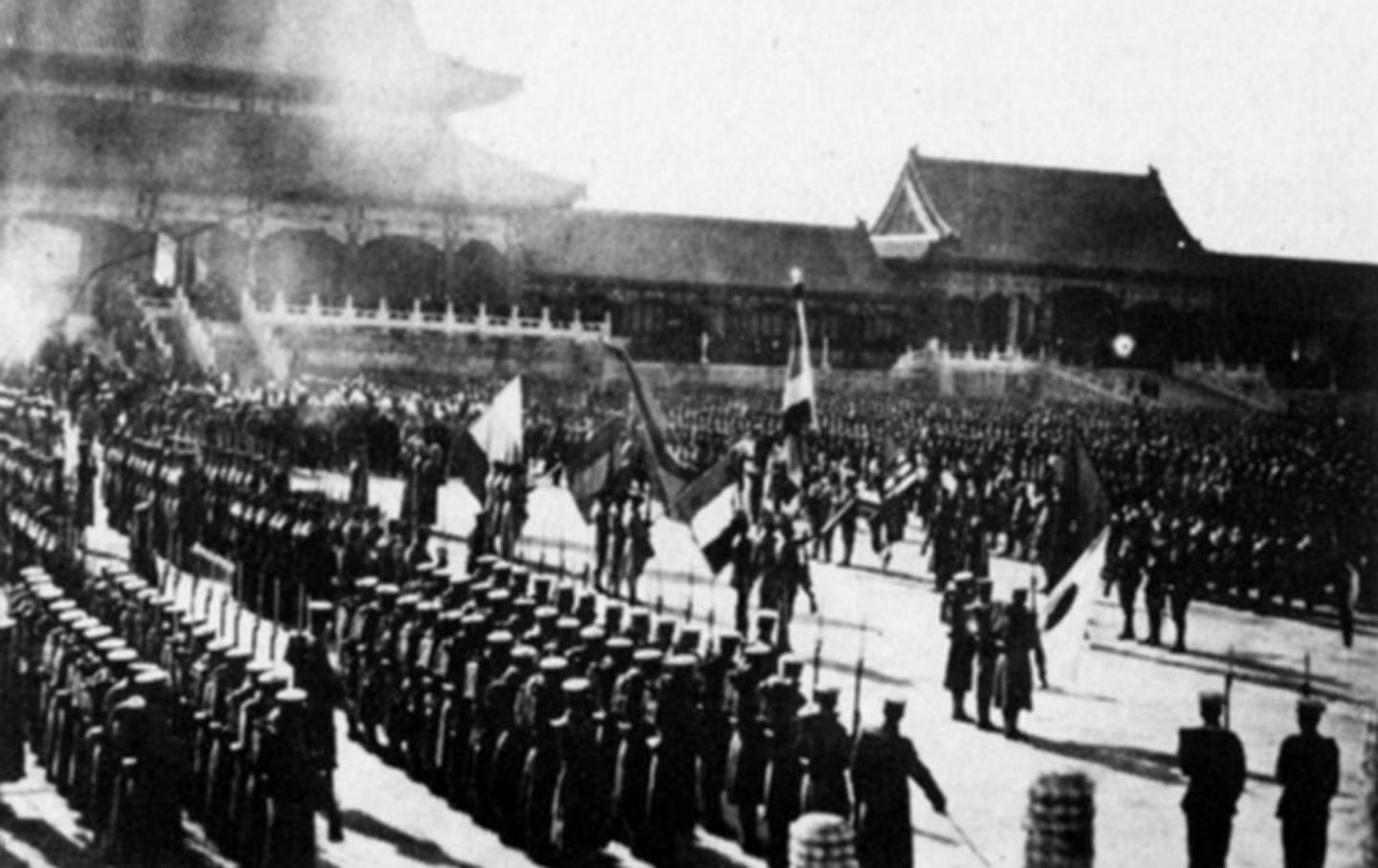
Boxer Rebellion begins in China
In response to widespread foreign encroachment upon Chinas national affairs Chinese nationalists launch the so-called Boxer Rebellion in Peking.Calling themselves I Ho Chuan or the Righteous and Harmonious Fists the nationalists occupied Peking killed several Westerners including German ambassador Baron von Ketteler and besieged the foreign legations in the diplomatic quarter of the city.By the end of the 19th century the Western powers and Japan had forced Chinas ruling Qing dynasty to accept wide foreign control over the countrys economic affairs.In the Opium Wars popular rebellions and the Sino-Japanese War China had fought to resist the foreigners but it lacked a modernized military and suffered millions of casualties.
In 1898 Tzuu Hzi the dowager empress and an anti-imperialist began supporting the I Ho Chuan who were known as the Boxers by the British because of their martial arts fighting style.The Boxers soon grew powerful and in late 1899 regular attacks on foreigners and Chinese Christians began.On June 20 1900 the Boxers now more than 100000 strong and led by the court of Tzuu Hzi besieged the foreigners in Pekings diplomatic quarter burned Christian churches in the city and destroyed the Peking-Tientsin railway line.As the Western powers and Japan organized a multinational force to crush the rebellion the siege of the Peking legations stretched into weeks and the diplomats their families and guards suffered through hunger and degrading conditions as they fought to keep the Boxers at bay.
On August 14 the international force featuring British Russian American Japanese French and German troops relieved Peking after fighting its way through much of northern China.Due to mutual jealousies between the powers it was agreed that China would not be partitioned further and in September 1901 the Peking Protocol was signed formally ending the Boxer Rebellion.By the terms of agreement the foreign nations received extremely favorable commercial treaties with China foreign troops were permanently stationed in Peking and China was forced to pay 333 million dollars as penalty for its rebellion.China was effectively a subject nation.