Samuel Adams writes of hope for more battles
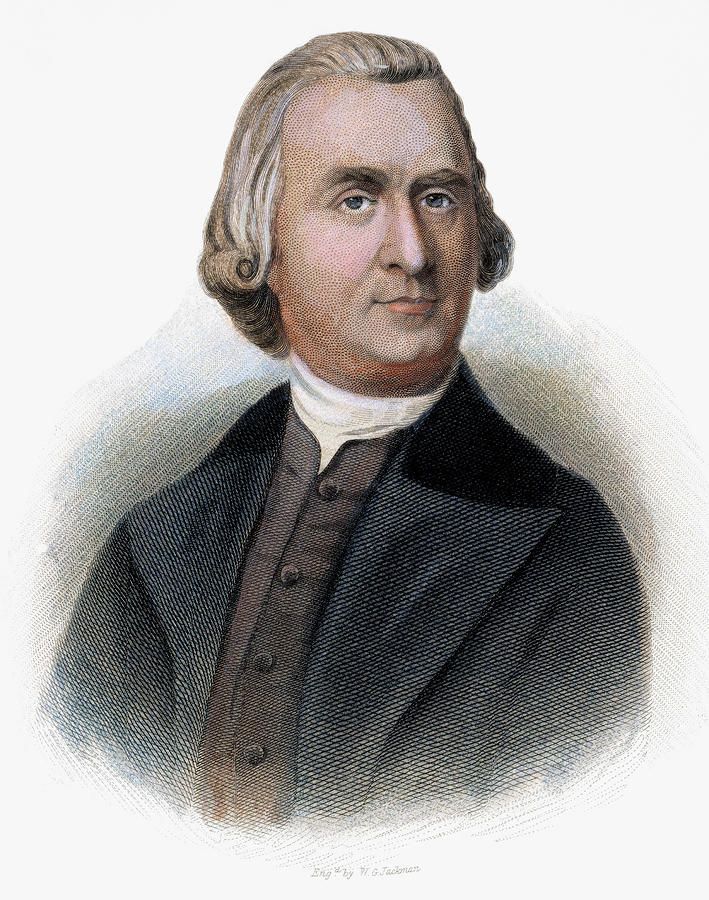
In a letter to Reverend Samuel Cooper dated April 30 1776 Samuel Adams writes of his hopes for another battle between British and American troops stating his belief that One battle would do more towards a Declaration of Independence than a long chain of conclusive arguments in a provincial convention or the Continental Congress.At the time of the letters composition General George Washington had successfully driven the British from Boston with his victory at Dorchester Heights on March 17.The British were left with very meager footholds in North America Quebec the Floridas and Nova Scotia Canada.Fifteen days after Adams wished for bloodshed the colonies effectively overthrew the British on the strength of the pen not the sword.
Emboldened by the impassioned words of Thomas Paine in his pamphlet Common Sense the people of Pennsylvania and New Jersey followed the congressional injunction of May 15 to take every kind of authority from the British crown and overthrew their royal governments.New York Delaware and Maryland soon followed suit.By June Thomas Jefferson began to draft the Declaration of Independence with John Adams and Benjamin Franklin at his side.Reverend Cooper the recipient of Adams letter played a quiet but influential role in the revolution.
Installed at the Brattle Street Church in Boston Massachusetts since 1746 he soon became one of the most popular preachers in the country.Founded in 1699 the Brattle Street Church was known for its rejection of conservative Calvinism and its influence upon Harvard University which like the church was becoming increasingly liberal.The church eventually rejected the concept of the Christian trinity and became Unitarian.
Cooper was devoted to both religious and civil liberty and was an early critic of British policy in America.In addition to writing some political works he vociferously shared these sentiments with his Brattle Street congregation which included John Hancock James Bowdoin and John Adams.Samuel Adams his fellow Massachusetts Patriot James Otis and Benjamin Franklin were also among Coopers circle of friends.Coopers political writings were popular abroad and he worked with his foreign acquaintances to cement American alliances with Europe during the American Revolution.
Cooper was seen as so instrumental in lobbying for the Patriot alliance with France negotiated by his friend Benjamin Franklin that he received a stipend from the French crown.