Organization of American States established
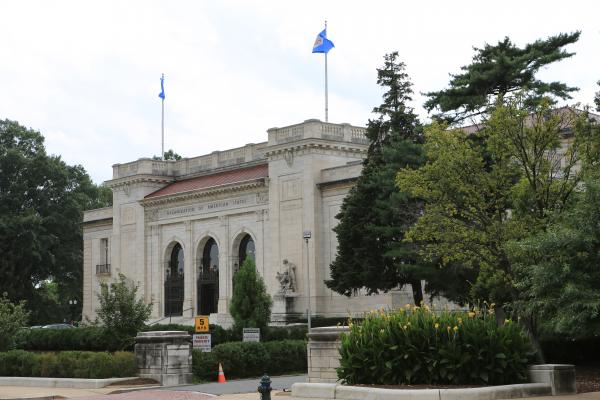
The United States and 20 Latin American nations sign the charter establishing the Organization of American States (OAS).The new institution was designed to facilitate better political relations between the member states and at least for the United States to serve as a bulwark against communist penetration of the Western Hemisphere.The OAS was established just a year after the Rio Pact was signed.The Rio Pact set up a defensive military alliance between the United States and the nations of Latin America.
The Latin American republics however wanted something more substantial than a mere military alliance.In response to Latin American demands for a summit to discuss economic and political relations with the United States American delegates traveled to an Inter-American Conference in Bogota Colombia in April 1948.Among other things the Latin American delegates wanted a political institution to deal with intra-hemispheric disputes-this request was based on the fear that the United States intent on its anticommunist crusade might engage in unilateral interventions against suspected Latin American governments.
The United States grudgingly gave its assent to the establishment of the OAS but insisted that the charter include a statement condemning international communism or any totalitarianism as irreconcilable with the tradition of the American countries.For the Latin American delegates the key article of the OAS charter stated that No State or group of States has the right to intervene directly or indirectly for any reason whatever in the internal or external affairs of any other State.The OAS never truly functioned as either the United States or the Latin American members had hoped.
For the United States the OAS proved a disappointment since the other member states did not seem to share its own Cold War zeal.In a number of casesmost notably Castros Cubathe OAS refused to give its approval of direct action to remove what the United States felt were communist threats.In other cases such as the U.S.
intervention in the Dominican Republic in 1965 the OAS gave only grudging support after the fact.For their parts the Latin American member states have also been disappointed in the OAS.The U.S.-orchestrated overthrow of the government of Guatemala in 1954 the failed Bay of Pigs invasion in Cuba in 1961 the intervention in the Dominican Republic in 1965 and other examples of the unilateral use of force by the United States indicate that it had not given up its gunboat diplomacy in Latin America.
The OAS continues to function though the end of the Cold War has dramatically lessened its importance in intra-hemispheric affairs.