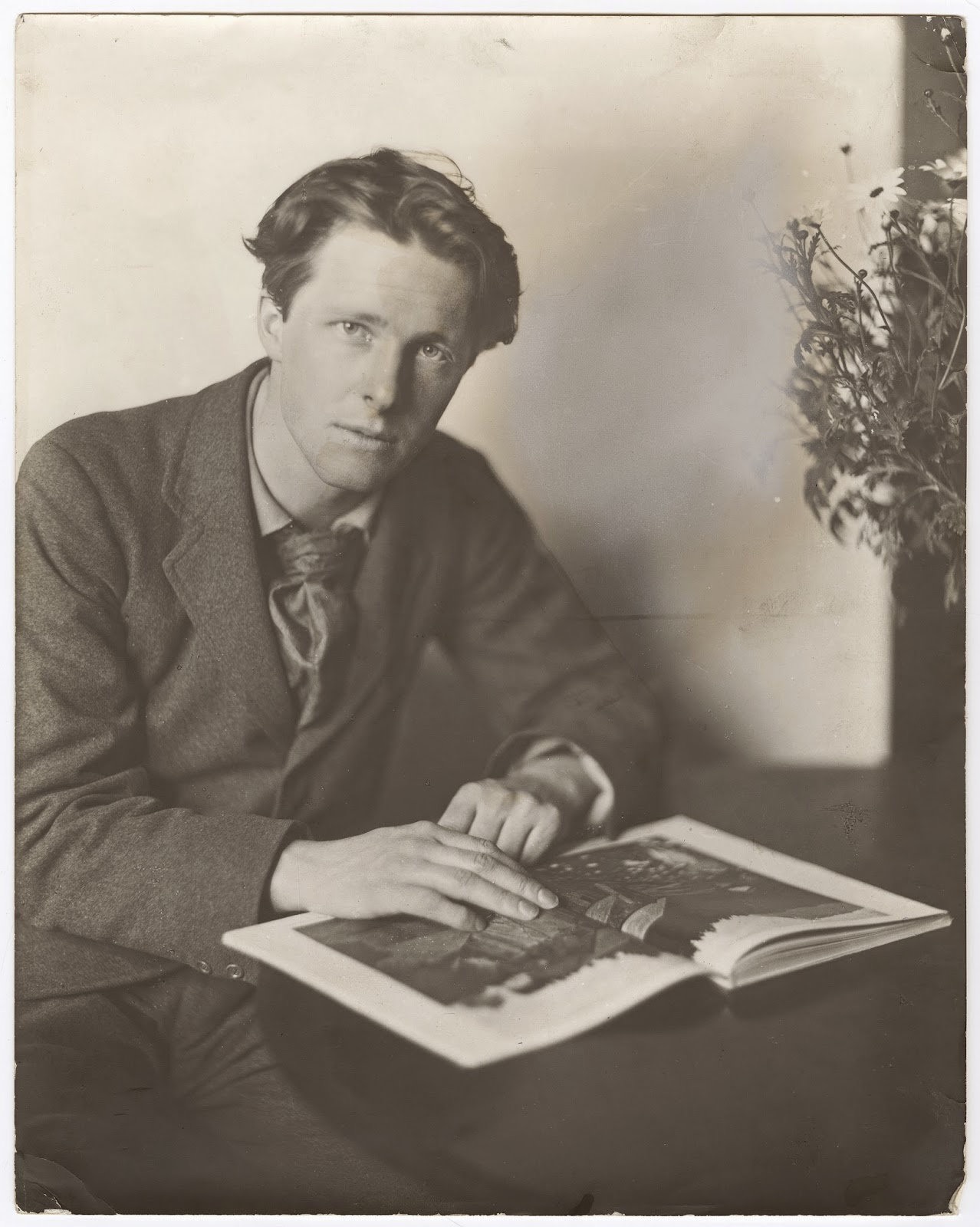
Poet-soldier Rupert Brooke dies in Greece
On this day in 1915 Rupert Brooke a young scholar and poet serving as an officer in the British Royal Navy dies of blood poisoning on a hospital ship anchored off the Greek island of Skyros while awaiting deployment in the Allied invasion of the Gallipoli Peninsula.Brooke born in 1887 in Rugby Britain attended Kings College in Cambridge where he befriended such future luminaries as E.M.Forster John Maynard Keynes and Virginia Stephens (later Woolf) as a member of the famed Bloomsbury set.Brookes travels in the United States in 1912 produced a series of acclaimed essays and articles he also lived for a time in Tahiti where he wrote some of his best-known poems.
Returning to England just before the outbreak of World War I in August 1914 Brooke gained a commission in the Royal Naval Division with the help of his close friend Edward Marsh then secretary to First Lord of the Admiralty Winston Churchill.In his poetry Brooke welcomed the arrival of war writing Now God be thanked Who has matched us with His hourAnd caught our youth and wakened us from sleeping.Rupert Brooke saw his only action of World War I during the defense of Antwerp Belgium against German invasion in early October 1914.Although aided by a stiff resistance from Antwerps inhabitants British troops suffered a decisive defeat in that conflict and were forced to retreat through a devastated Belgian countryside.
Brooke subsequently returned to Britain to await redeployment where he caught the flu during the training and preparation.While recovering Brooke wrote what would become the most famous of his war sonnets including Peace Safety The Dead and The Soldier.Brooke sailed for the Dardanelles near Turkey on February 18 1915 problems with enemy mines led to a delay in his squadrons deployment and a training stint in Egypt where Brooke contracted dysentery.By this time Brookes poems had begun to gain notice in Britain and he was offered the chance to return to Britain and serve away from the battlefield after his recovery he refused.
On April 10 he sailed with his unit to Greece where they anchored off Skyros.There Brooke developed a fatal case of blood poisoning from an insect bite he died on April 23 1915 aboard a hospital ship two days before the Allies launched their massive ill-fated invasion of Gallipoli.On April 26 The Times of London ran an obituary notice for Brooke written by Winston Churchill.The thoughts to which he gave expression in the very few incomparable war sonnets which he has left behind Churchill wrote will be shared by many thousands of young men moving resolutely and blithely forward in this the hardest the cruelest and the least-rewarded of all the wars that men have fought.
The opening lines of The Soldier Brookes most famous poem evoke the simple heartfelt patriotism to which Churchill felt all Englands soldiers should aspire If I should die think only this of meThat theres some corner of a foreign fieldThat is for ever England.