International Labor Organization founded
On this day in 1919 in Paris France the International Labor Organization (ILO) is founded as an independent affiliated agency of the League of Nations.The call for just and equal labor standards and improved working and living conditions for the worlds workers had begun to be heard long before the outbreak of World War I.As the Industrial Revolution swept from France and Britain across the rest of Europe over the course of the 19th century it completely altered the economic and social landscape of the continent (and eventually the world).Among the early advocates of an international organization to regulate labor were Robert Owen a Welsh socialist and the founder of the first short-lived British trade union in 1833 Charles Hindley (1800-1857) a cotton spinner and member of the British parliament from 1853 to 1857 and Daniel Legrand a French industrialist philanthropist and writer.Though these 19th-century thinkers were ahead of their time the unparalleled destruction wrought by the Great War of 1914-1918 led to increased support among the worlds leaders for just such an organization not only to regulate labor standards for the steadily growing international population of industrial workers but also to preserve peace in the volatile atmosphere of the post-war world.
For U.S.President Woodrow Wilson especially this peace-keeping organizationthe League of Nationswas the most important part of the Versailles negotiations.The creation of an international labor organization as a separate but affiliated agency of the League was seen by its founders as a necessary and vital part of the League itself.The ILO Constitution written between January and April 1919 by a commission of representatives from nine countriesBelgium Cuba Czechoslovakia France Italy Japan Poland the United Kingdom and the United Statesand chaired by Samuel Gompers head of the American Federation of Labour (AFL) eventually became Part XIII of the Treaty of Versailles.Its preamble began with a statement of purposeThe League of Nations has for its object the establishment of universal peace and such a peace can be established only if it is based upon social justiceand went on to lay out the threefold motivation behind the creation of the ILO.
First there was a necessity to improve the conditions of the average worker who without regulation was increasingly subject to exploitation by industrial management including long hours low wages and harsh treatment.There was also a political motive if conditions did not improve the growing discontent among the worlds workers threatened to explode into large-scale demonstrations of unrest and possibly revolution as had occurred in Russia in 1917 and to a lesser extent in Germany and Austria-Hungary near the end of the war.Thirdly without universal standards of labor that could be enforced across international borders any country that instituted social reform would find itself at a disadvantage economically.The ILO as created in April 1919 was a tripartite organizationhalf the members of its governing body the executive council were representatives of various governments one-fourth were employers representatives and one-fourth were workers representatives.
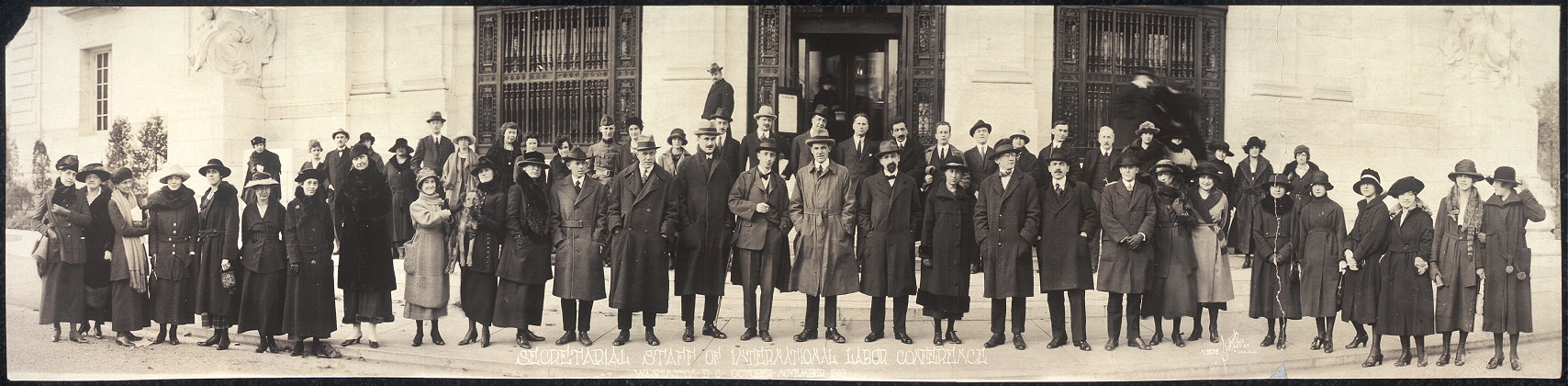
The first annual International Labor Conference which convened in Washington D.C.in October 1919 issued the organizations first six conventions which addressed among other issues limitations on working hours unemployment maternity protection and minimum working age.The following summer the International Labor Office the ILOs permanent secretariat was set up in Geneva Switzerland.Though the League of Nations faltered in the post-war years the ILO flourished even as its mission expanded from setting universal labor standards to guarding against more general human rights violations worldwide and facilitating technical cooperation to assist developing nations.
In 1946 after the Second World War the ILO became the first specialized agency associated with the Leagues replacement the United Nations (UN). In April 1969 on occasion of the 50th anniversary of its founding the ILO was awarded the Nobel Peace Prize.By 1971 membership had grown from 45 countries in 1919 to 121.