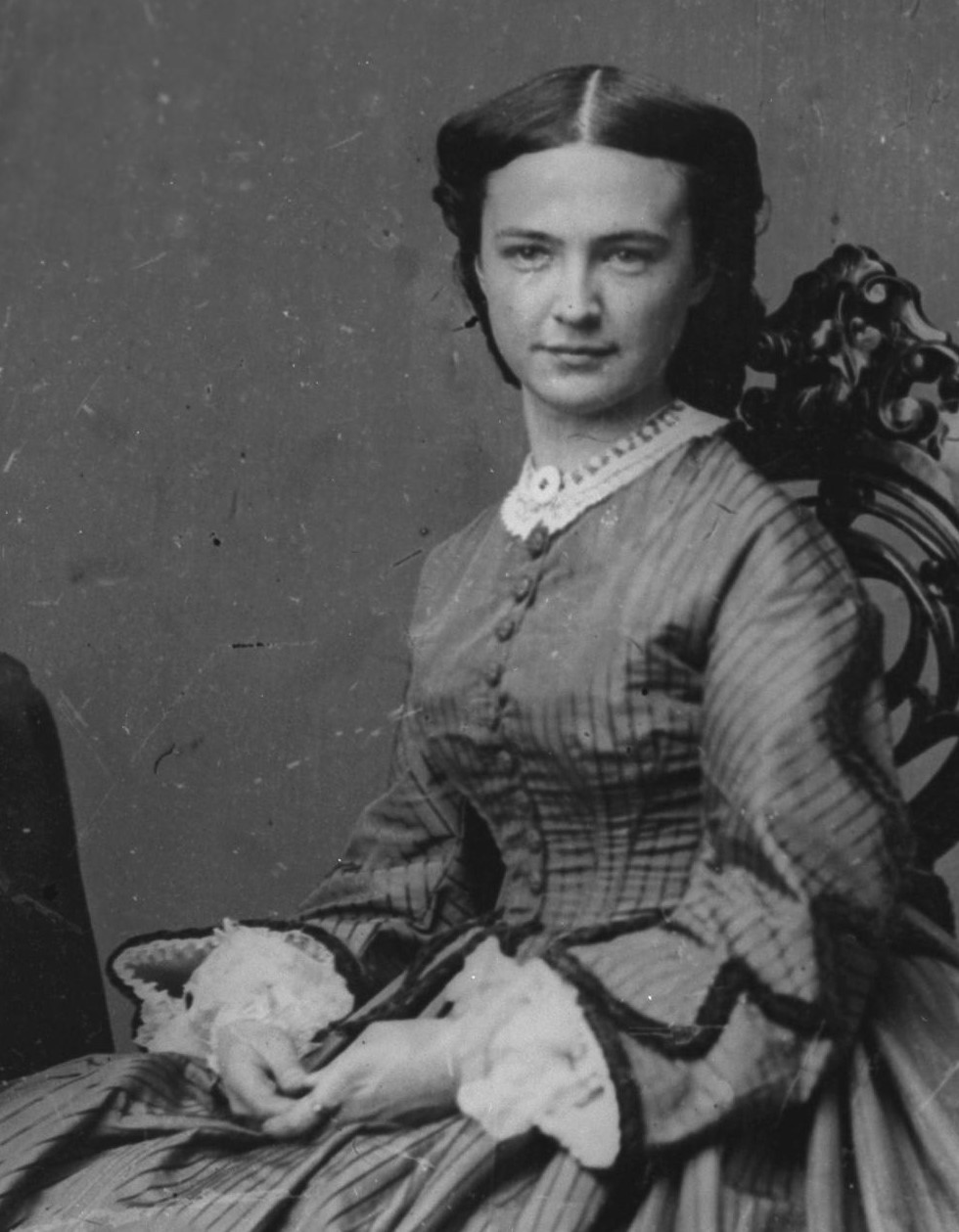
Elizabeth Bacon Custer is born in Michigan
Elizabeth Bacon Custer a significant chronicler of the West and the wife of George Custer is born in Monroe Michigan.Elizabeth Custer is best known today for her decades-long effort to celebrate her husbands life and exonerate him for the massacre of the Seventh Cavalry at Little Bighorn in 1876.She was more than her husbands apologist however and today her writings provide a rare female perspective on military life in the West of the mid-19th century.Talented intelligent and beautiful Elizabeth Custer graduated as valedictorian from the Young Ladies Seminary and Collegiate Institute in Monroe Michigan.Not long after she met Captain George Custer.
After Custers bravery in several Civil War battles made him a national hero Elizabeths father accepted Custer as a fit suitor for his daughters hand and the couple married in 1864.After the war George Custer remained in the military taking his young wife along on his many assignments around the nation.Long interested in writing Elizabeth found that her life as an army wife provided her with excellent material.In the summer of 1865 she accompanied Custer and his troops to Hempstead Texas.
Her diaries recording the often harsh living conditions later became the basis for her 1887 book Tenting on the Plains.The book provides a sharp portrait of life on the Texas frontier and Elizabeth writes with dismay of the violent and often trigger-happy Texans she and her husband encountered.Welcomed into the growing elite planter society of the state Elizabeth was appalled to discover that some Texans were still trading slaves late in 1865-well after the end of the Civil War.Following her husbands death at Little Bighorn in 1876 Elizabeth learned that President Ulysses Grant and several other senior officers blamed Custer for the Indian massacre of his battalion of 220 men.
Determined to defend Custer from what she believed were malicious attacks Elizabeth wrote several books recounting the couples life on the Plains.In Boots and Saddles (1885) and Following the Guidon (1890) Elizabeth provided a biased portrait of her husband as an exemplary son a loving husband and father and a conscientious commanding officer.The books also offered a rare view of the Plains Indian wars from the perspective of a Victorian Era woman.
Applying her own cultural standards to Native Americans Elizabeth believed that Indian braves were exploitative of their wives and deserved to be conquered and removed to reservations.Sadly Elizabeths opinions of Native Americans reflected and encouraged those of most Americans.Many people who had known her husband however did not share her admiring view of him.Reluctant to challenge a devoted widow many critics remained silent during her lifetime.
A year after she died in 1933 at the age of 90 however the first critical reappraisal of Custers career appeared with Frederic Van de Waters book The Glory Hunter.