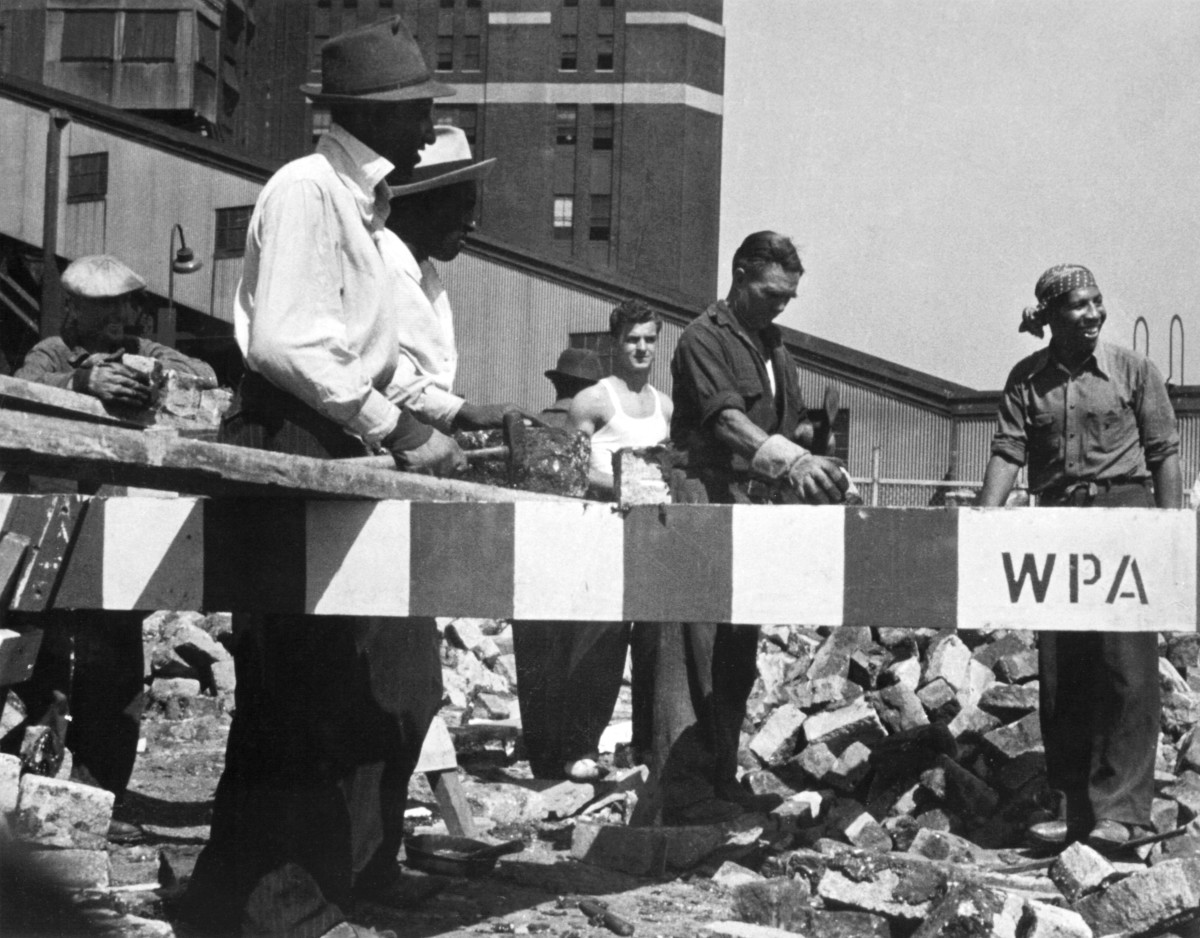
Works Progress Administration established by Congress as part of FDR’s New Deal
On April 8 1935 Congress votes to approve the Works Progress Administration (WPA) a central part of President Franklin D.Roosevelts New Deal.In November 1932 at the height of the Great Depression Governor Roosevelt of New York was elected the 32nd president of the United States.In his inaugural address on March 4 1933 Roosevelt promised Americans that the only thing we have to fear is fear itself and outlined his New Dealan expansion of the federal government as an instrument of employment opportunity and welfare.In April 1935 the WPA was established under the Emergency Relief Appropriation Act as a means of creating government jobs for some of the nations many unemployed.
Under the direction of Harry L.Hopkins the WPA employed more than 8.5 million persons on 1.4 million public projects before it was disbanded in 1943.The program chose work that would not interfere with private enterprise especially vast public building projects like the construction of highways bridges and dams.
However the WPA also provided federal funding for students who were given work under the National Youth Administration.The careers of several important American artists including Jackson Pollack and Willem de Kooning were also launched thanks to WPA endowments.Although its scale was unprecedented the WPA never managed to serve more than a quarter of the nations unemployed.
Its programs were extremely popular though and contributed significantly to Roosevelts landslide reelection in 1936.