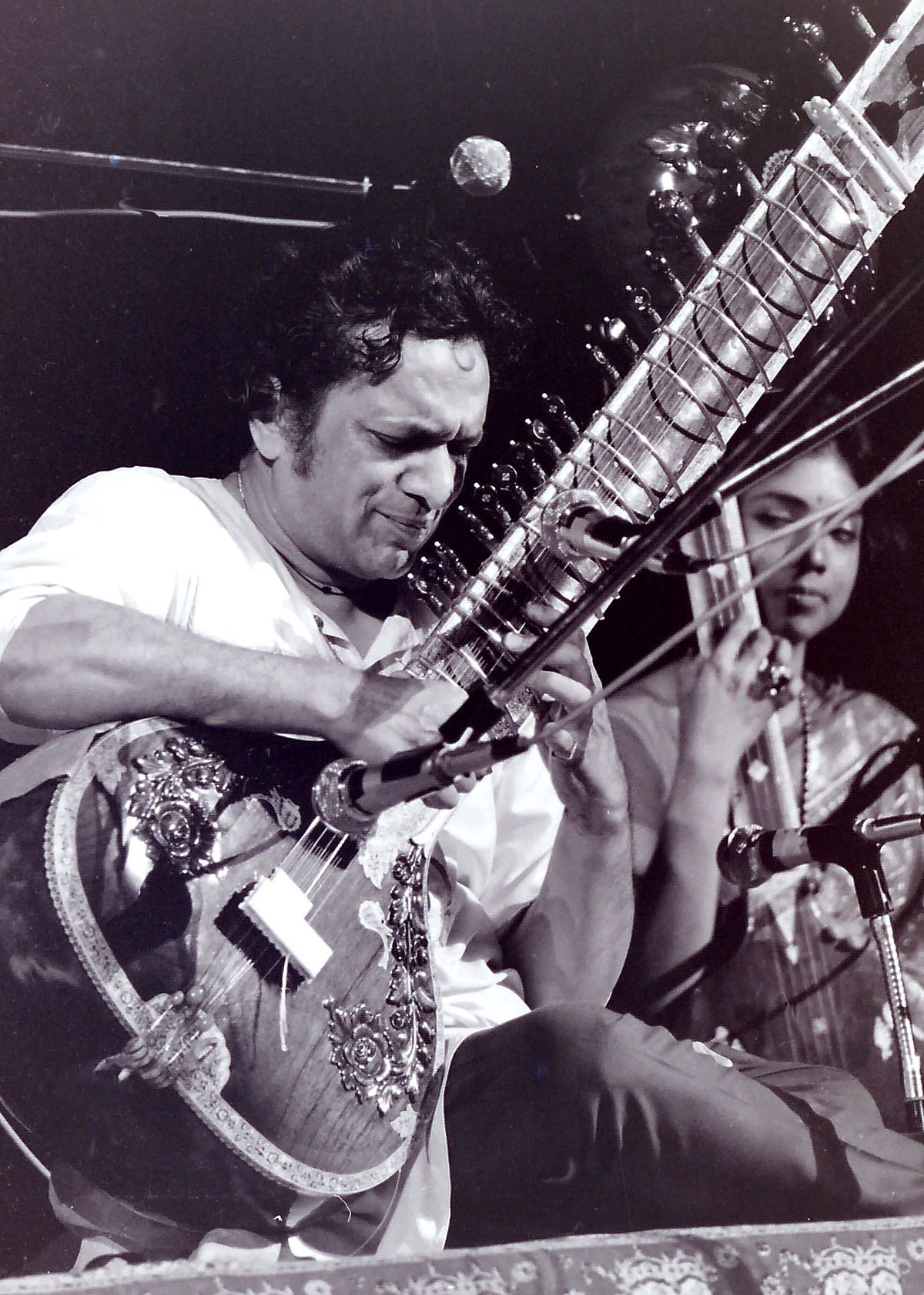
Indian sitar legend Ravi Shankar is born
East is East and West is West and never the twain shall meet goes the famous Rudyard Kipling quotation.Its a statement that certainly applied in the world of pop music prior to the 1960s when a handful of influential British groups brought the sound of Indian classical music into rock and roll.Experimentation with the sitar by Brian Jones and George Harrison gave songs like Paint It Black and Norwegian Wood their distinctive sound and that experimentation was inspired almost entirely by the work of one man Ravi Shankar.
A classically trained sitar virtuoso who influenced a generation of Western pop stars and introduced millions of listeners to the music of his native India Ravi Shankar was born in Varanasi India on April 7 1920.The Brahmin family into which Shankar was born had a tradition of involvement in music and the arts stretching back literally for centuries.Shankars brother Uday 20 years Ravis senior was a famous classical dancer and choreographer.While on tour with Udays Compagnie de Danse et Musique Indou a 13-year-old Ravi Shankar met the instrumental performer and teacher Allauddin Khan a titanic figure in classical Indian music in the early 20th century.
Shankar would apprentice under Khan for the next 10 years mastering the sitar and the traditional raga performance style and repertoire.He set out on his own in 1944 eventually building an enormous international reputation on the strength of his recordings live performances and film scoresthe most famous being those for Satyajit Rays Apu trilogy.By the mid-1960s Shankar had recorded eight albums on the British HMV label and played prominent venues and festivals from Moscow to Edinburgh but it was his discovery by the Beatles George Harrison that made him a household name and changed the very sound of the 60s.George Harrison was first exposed to Ravi Shankars music by David Crosby of the Byrds in 1965.
He learned the sitar well enough on his own to record his part on Norwegian Wood but his desire to learn directly from the master took him to India in September 1966.(The rest of the Beatles later followed after George became involved with the Maharishi Mahesh Yogi while there.) That association in turn brought Shankar to America where he gave a four-hour performance at 1967s Monterey Pop Festival that produced a bigger ovation than for many of the festivals more famous acts.Shankar quickly became a darling of the hippie movement but for his part he found the countercultures embrace of Indian culture to be superficial.
And while the droning sound of a sitar still evokes images of fringed leather vests and lava lamps for many Americans Ravi Shankars performances on the ancient instrument are truly timeless.Shankar died on December 11 2012 in La Jolla California.He is survived by his daughters Grammy Award-winning musician Nora Jones and Grammy Award-nominated sitar player and composer Anoushka Shankar.