Results of Peers investigation announced
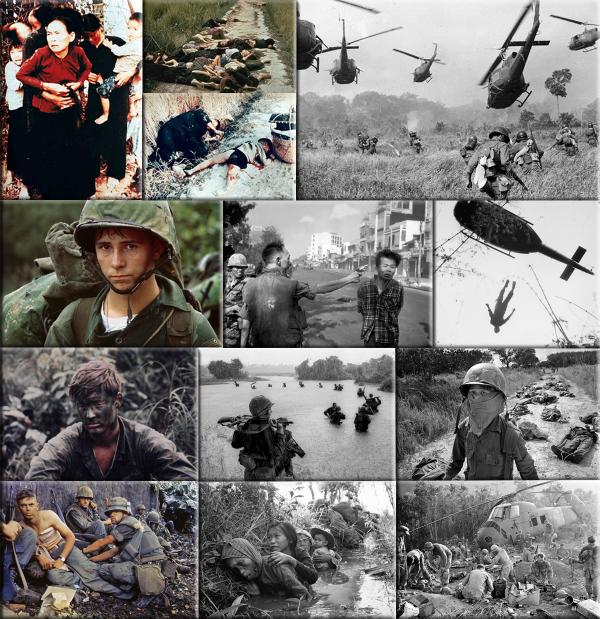
After an investigation the U.S.Army accuses 14 officers of suppressing information related to an incident at My Lai in March 1968.Soldiers from a company had massacred Vietnamese civilians including women and children at My Lai 4 a cluster of hamlets in Quang Ngai Province on March 16 1968.The company had been conducting a search-and-destroy mission looking for the 48th Viet Cong (VC) Local Force Battalion.
The unit entered My Lai but found only women children and old men.Frustrated by unanswered losses due to snipers and mines the soldiers took out their anger on the villagers indiscriminately shooting people as they ran from their huts and systematically rounding up and executing the survivors.Reportedly the killing was only stopped when Warrant Officer Hugh Thompson landed his helicopter between the Americans and the fleeing South Vietnamese confronting the soldiers and blocking them from further action against the villagers.The incident was subsequently covered up but eventually came to light a year later.
The Army commissioned a board of inquiry headed by Lieutenant General Peers.After investigating Peers reported that U.S.soldiers committed individual and group acts of murder rape sodomy maiming and assault that took the lives of a large number of civilianshe concluded that a tragedy of major proportions occurred at My Lai.The Peers report said that each successive level of command received a more watered-down account of what had actually occurred the higher the report went the lower the estimate of civilians allegedly killed by Americans.
Peers found that at least 30 persons knew of the atrocity but only 14 were charged with crimes.All eventually had their charges dismissed or were acquitted by courts-martial except Lt.William Calley the platoon leader of the unit involved.He was found guilty of personally murdering 22 civilians and sentenced to life imprisonment but his sentence was reduced to 20 years by the Court of Military Appeals and further reduced later to 10 years by the Secretary of the Army.
Proclaimed by much of the public as a scapegoat Calley was paroled in 1974 after having served about a third of his 10-year sentence.