AIM takes Wounded Knee
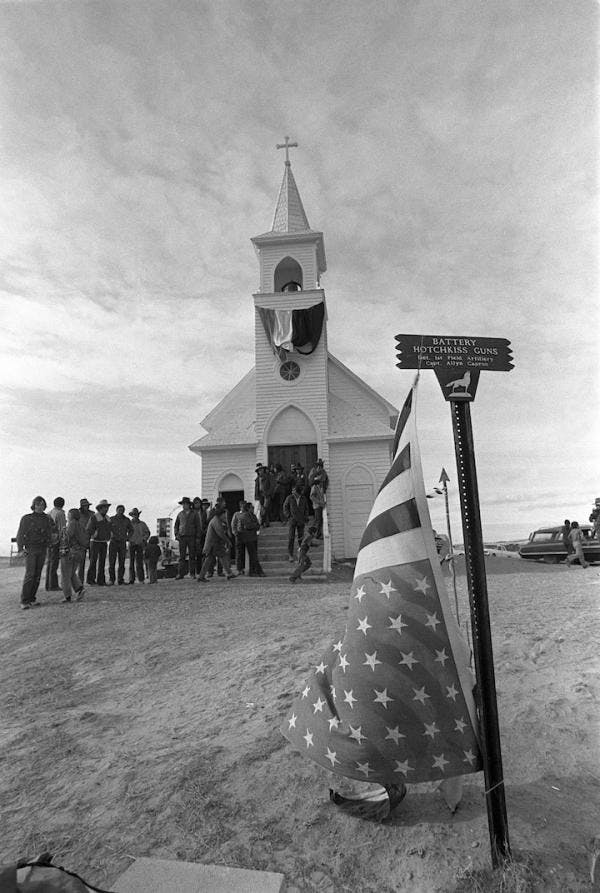
Angered over a long history of violated treaties mistreatment and discrimination 200 members of the American Indian Movement (AIM) occupy the tiny hamlet of Wounded Knee South Dakota.Former Sioux and Ojibwa convicts attempting to stop police harassment of Indians in the Minneapolis area founded the American Indian Movement in 1968.Borrowing some tactics from the antiwar student demonstrators of the era AIM soon gained national notoriety for its flamboyant protests.Many mainstream Indian leaders though denounced the youth-dominated group as too radical.
In 1972 a faction of AIM members led by Dennis Banks and Leonard Peltier sought to close the divide by making alliances with traditional tribal elders on reservations.They had their greatest success on the Pine Ridge Reservation in South Dakota after a group of young whites murdered a Sioux Indian named Yellow Thunder.Although Yellow Thunders attackers only received six-year prison sentences this was widely seen as a victory by the local Sioux accustomed to unfair treatment by the racist Anglo judicial system.
AIMs highly visible publicity campaign on the case was given considerable credit for the verdict winning the organization a great deal of respect on the reservation.AIMs growing prestige and influence however threatened the conservative Sioux tribal chairman Dick Wilson.When Wilson learned of a planned AIM protest against his administration at Pine Ridge he retreated to tribal headquarters where he was under the protection of federal marshals and Bureau of Indian Affairs police.Rather than confront the police in Pine Ridge AIM decided to occupy the symbolically significant hamlet of Wounded Knee the site of an 1890 massacre of a band of unarmed Sioux by the U.S.
Cavalry.Wilson with the backing of the federal government responded by besieging Wounded Knee.During the 71 days of the siege federal officers and AIM members exchanged gunfire almost nightly.Two Native Americans were killed and a federal marshal permanently paralyzed by a bullet wound.
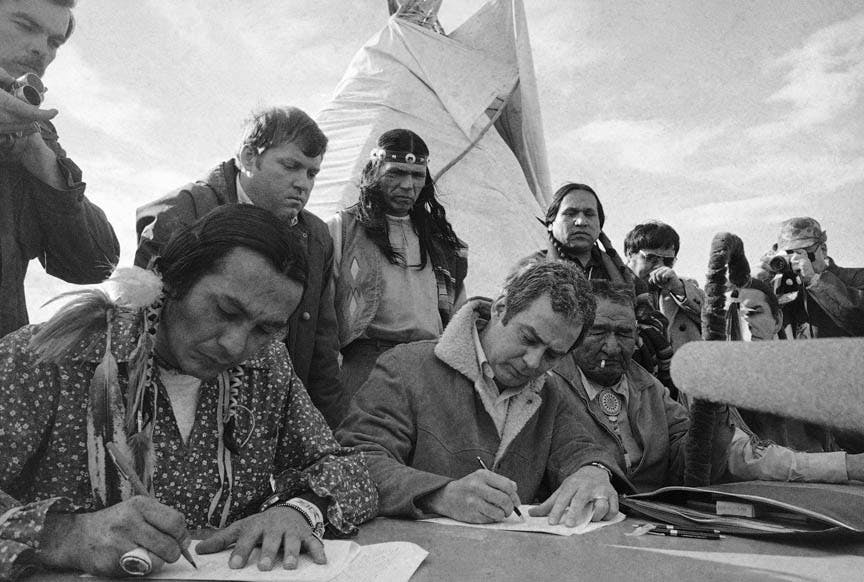
The leaders of AIM finally surrendered after a negotiated settlement was reached.In a subsequent trial the judge ordered their acquittal because of evidence that the FBI had manipulated key witnesses.AIM emerged victorious and succeeded in shining a national spotlight on the problems of modern Native Americans.The troubles at Wounded Knee however were not over.
A virtual civil war broke out between the opposing Indian factions on the Pine Ridge reservation and a series of beatings shootings and murders left more than 100 Indians dead.When two FBI agents were killed in a 1975 gunfight the agency raided the reservation and arrested AIM leader Leonard Peltier for the crime.The FBI crackdown coupled with AIMs own excesses ended its influence at Pine Ridge.
Peltier was convicted of killing the two FBI agents and sentenced to life in prison.Peltiers supporters however continue to maintain his innocence and seek a presidential pardon to this day.