W.E.B. DuBois is born
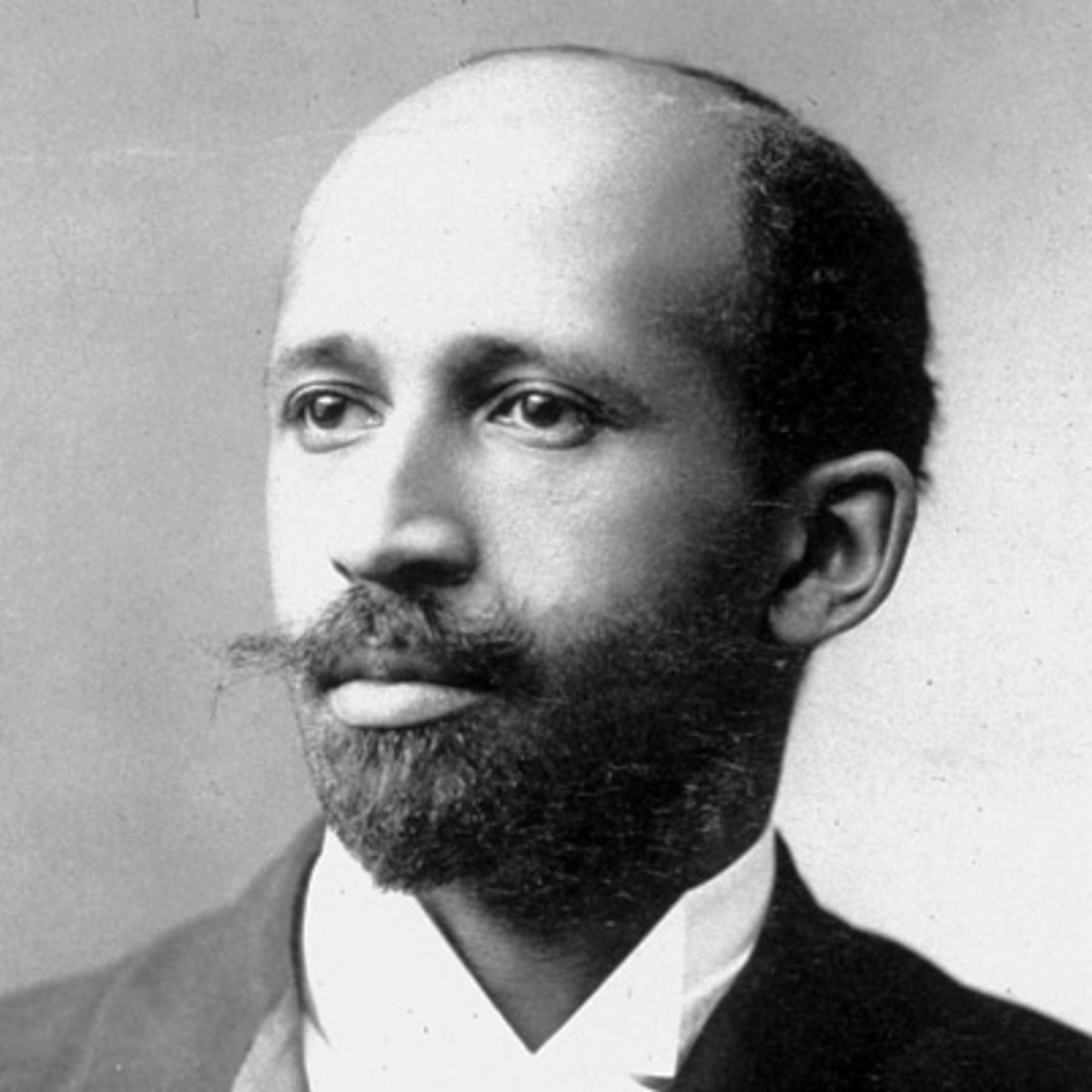
On this day in 1868 William Edward Burghardt (W.E.B.) DuBois is born in Great Barrington Massachusetts.A brilliant scholar DuBois was an influential proponent of civil rights.DuBois childhood was happy but during adolescence he became aware of a vast veil separating him from his white classmates.He devoted most of his life to studying the position of blacks in America from a sociological point of view.
He took his doctorate at Harvard but was unable to get a job at a major university despite his impressive academic achievements and the publication of his doctoral thesis about the slave trade to the United States in the mid-1800s.He taught at Wilberforce College in Ohio then spent a year at the University of Pennsylvania where he wrote his first major book The Philadelphia Negro A Social Study (1899).The book was the first sociological case study of a black community.DuBois came to national attention with the publication of The Souls of Black Folks (1903).
The book explored the thesis that the central problem of the Twentieth Century is the problem of the color line.One controversial essay attacked the widely respected Booker T.Washington founder of Tuskegee Institute in Alabama which trained blacks in agricultural and industrial skills.
DuBois accused Washington of selling out blacks by advocating silence in civil rights issues in return for vocational training opportunities for blacks.In 1909 DuBois helped found the National Association for the Advancement of Colored People.He edited the associations journal The Crisis from 1910 to 1934 reaching an audience of more than 100000 readers.But he resigned after an ideological rift with the group.
In 1935 he published Black Reconstruction a Marxist interpretation of the post-Civil War era.At Atlanta University where he later taught he founded a review of race and culture called Phylon in 1940 and the same year published Dusk at Dawn in which he examined his own career as a case study of race dynamics.He rejoined the NAACP from 1944 to 1948 but broke with the group permanently after a bitter dispute.
He joined the Communist Party in 1961 and moved to Ghana where he became a citizen in 1963 the year of his death.