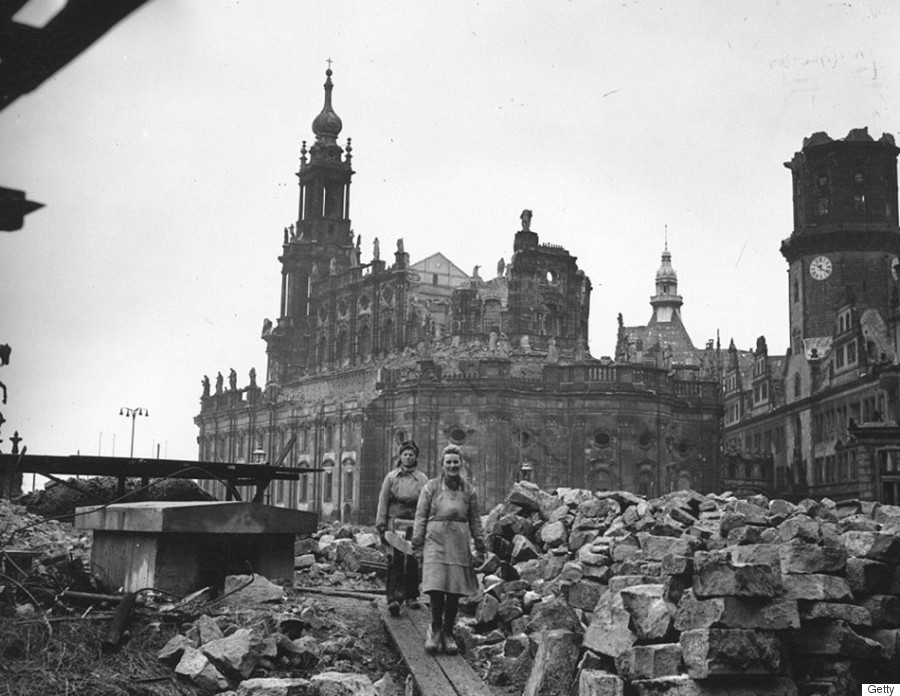
Dresden devastated
On the evening of February 13 1945 the most controversial episode in the Allied air war against Germany begins as hundreds of British bombers loaded with incendiaries and high-explosive bombs descend on Dresden a historic city located in eastern Germany.Dresden was neither a war production city nor a major industrial center and before the massive air raid of February 1945 it had not suffered a major Allied attack.By February 15 the city was a smoldering ruin and an unknown number of civilianssomewhere between 35000 and 135000were dead.By February 1945 the jaws of the Allied vise were closing shut on Nazi Germany.
In the west Nazi leader Adolf Hitlers desperate counteroffensive against the Allies in Belgiums Ardennes forest had ended in total failure.In the east the Red Army had captured East Prussia and reached the Oder Riverless than 50 miles from Berlin.The once-proud Luftwaffe was a skeleton of an air fleet and the Allies ruled the skies over Europe dropping thousands of tons of bombs on Germany every day.From February 4 to February 11 the Big Three Allied leadersU.S.
President Franklin D.Roosevelt British Prime Minister Winston Churchill and Soviet Premier Joseph Stalinmet at Yalta in the USSR and compromised on their visions of the postwar world.Other than deciding on what German territory would be conquered by which power little time was given to military considerations in the war against the Third Reich.
Churchill and Roosevelt however did promise Stalin to continue their bombing campaign against eastern Germany in preparation for the advancing Soviet forces.An important aspect of the Allied air war against Germany involved what is known as area or saturation bombing.In area bombing all enemy industrynot just war munitionsis targeted and civilian portions of cities are obliterated along with troop areas.Before the advent of the atomic bomb cities were most effectively destroyed through the use of incendiary bombs that caused unnaturally fierce fires in the enemy cities.
Such attacks Allied command reasoned would ravage the German economy break the morale of the German people and force an early surrender.Germany was the first to employ area bombing tactics during its assault on Poland in September 1939.In 1940 during the Battle of Britain the Luftwaffe failed to bring Britain to it knees by targeting London and other heavily populated areas with area bombing attacks.Stung but unbowed the RAF avenged the bombings of London and Coventry in 1942 when it launched the first of many saturation bombing attacks against Germany.
In 1944 Adolf Hitler named the worlds first long-range offensive missile V-1 after Vergeltung the German word for vengeance and an expression of his desire to repay Britain for its devastating bombardment of Germany.The Allies never overtly admitted that they were engaged in saturation bombing specific military targets were announced in relation to every attack.It was but a veneer however and few mourned the destruction of German cities that built the weapons and bred the soldiers that by 1945 had killed more than 10 million Allied soldiers and even more civilians.The firebombing of Dresden would prove the exception to this rule.Before World War II Dresden was called the Florence of the Elbe and was regarded as one the worlds most beautiful cities for its architecture and museums.
Although no German city remained isolated from Hitlers war machine Dresdens contribution to the war effort was minimal compared with other German cities.In February 1945 refugees fleeing the Russian advance in the east took refuge there.As Hitler had thrown much of his surviving forces into a defense of Berlin in the north city defenses were minimal and the Russians would have had little trouble capturing Dresden.
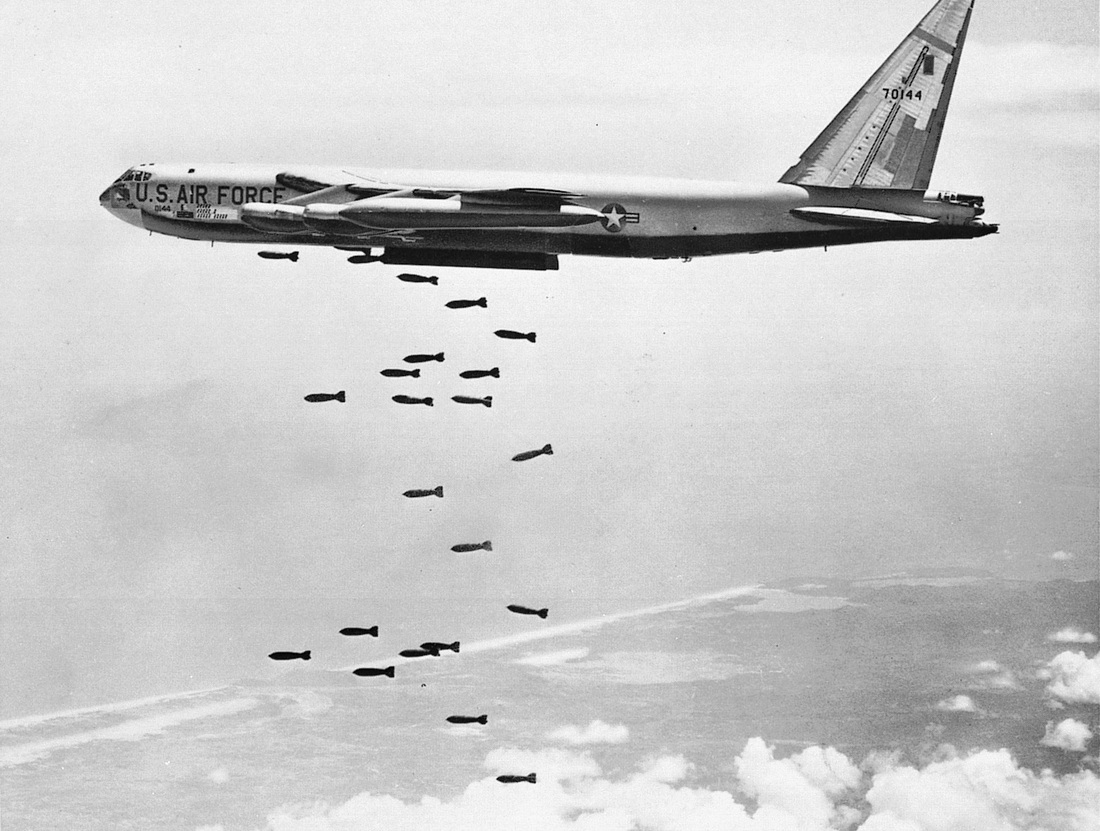
It seemed an unlikely target for a major Allied air attack.On the night of February 13 hundreds of RAF bombers descended on Dresden in two waves dropping their lethal cargo indiscriminately over the city.The citys air defenses were so weak that only six Lancaster bombers were shot down.By the morning some 800 British bombers had dropped 1478 tons of high-explosive bombs and 1182 tons of incendiaries on Dresden creating a great firestorm that destroyed most of the city and killed numerous civilians.
Later that day as survivors made their way out of the smoldering city over 300 U.S.bombers began bombing Dresdens railways bridges and transportation facilities killing thousands more.On February 15 another 200 U.S.
bombers continued their assault on the citys infrastructure.All told the bombers of the U.S.Eighth Air Force dropped 954 tons of high-explosive bombs and 294 tons of incendiaries on Dresden.
Later the Eighth Air Force would drop 2800 more tons of bombs on Dresden in three other attacks before the wars end.The Allies claimed that by bombing Dresden they were disrupting important lines of communication that would have hindered the Soviet offensive.This may be true but there is no disputing that the British incendiary attack on the night of February 13-14 was conducted also if not primarily for the purpose of terrorizing the German population and forcing an early surrender.It should be noted that Germany unlike Japan later in the year did not surrender until nearly the last possible momentwhen its capital had fallen and its Fuhrer was dead.Because there were an unknown number of refugees in Dresden at the time of the Allied attack it is impossible to know exactly how many civilians perished.
After the war investigators from various countries and with varying political motives calculated the number of civilians killed to be as little as 8000 to more than 200000.Estimates today range from 35000 to 135000.Looking at photographs of Dresden after the attack in which the few buildings still standing are completely gutted it seems improbable that only 35000 of the million or so people in Dresden that night were killed.
Cellars and other shelters would have been meager protection against a firestorm that blew poisonous air heated to hundreds of degrees Fahrenheit across the city at hurricane-like speeds.At the end of the war Dresden was so badly damaged that the city was basically leveled.A handful of historic buildingsthe Zwinger Palace the Dresden State Opera House and several fine churcheswere carefully reconstructed out of the rubble but the rest of the city was rebuilt with plain modern buildings.American author Kurt Vonnegut who was a prisoner of war in Dresden during the Allied attack and tackled the controversial event in his book Slaughterhouse-Five said of postwar Dresden It looked a lot like Dayton Ohio more open spaces than Dayton has.
There must be tons of human bone meal in the ground.