Edison demonstrates incandescent light
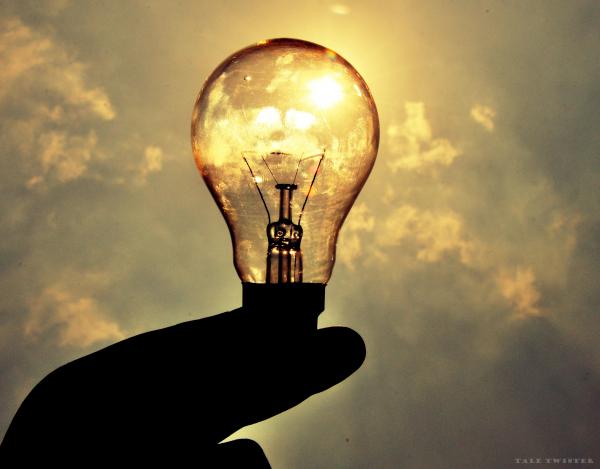
In the first public demonstration of his incandescent lightbulb American inventor Thomas Alva Edison lights up a street in Menlo Park New Jersey.The Pennsylvania Railroad Company ran special trains to Menlo Park on the day of the demonstration in response to public enthusiasm over the event.Although the first incandescent lamp had been produced 40 years earlier no inventor had been able to come up with a practical design until Edison embraced the challenge in the late 1870s.After countless tests he developed a high-resistance carbon-thread filament that burned steadily for hours and an electric generator sophisticated enough to power a large lighting system.Born in Milan Ohio in 1847 Edison received little formal schooling which was customary for most Americans at the time.
He developed serious hearing problems at an early age and this disability provided the motivation for many of his inventions.At age 16 he found work as a telegraph operator and soon was devoting much of his energy and natural ingenuity toward improving the telegraph system itself.By 1869 he was pursuing invention full-time and in 1876 moved into a laboratory and machine shop in Menlo Park New Jersey.Edisons experiments were guided by his remarkable intuition but he also took care to employ assistants who provided the mathematical and technical expertise he lacked.
At Menlo Park Edison continued his work on the telegraph and in 1877 he stumbled on one of his great inventionsthe phonographwhile working on a way to record telephone communication.Public demonstrations of the phonograph made the Yankee inventor world famous and he was dubbed the Wizard of Menlo Park.Although the discovery of a way to record and play back sound ensured him a place in the annals of history the phonograph was only the first of several Edison creations that would transform late 19th-century life.Among other notable inventions Edison and his assistants developed the first practical incandescent lightbulb in 1879 and a forerunner of the movie camera and projector in the late 1880s.
In 1887 he opened the worlds first industrial research laboratory at West Orange New Jersey where he employed dozens of workers to investigate systematically a given subject.Perhaps his greatest contribution to the modern industrial world came from his work in electricity.He developed a complete electrical distribution system for light and power set up the worlds first power plant in New York City and invented the alkaline battery the first electric railroad and a host of other inventions that laid the basis for the modern electrical world.One of the most prolific inventors in history he continued to work into his 80s and acquired 1093 patents in his lifetime.
He died in 1931 at the age of 84.