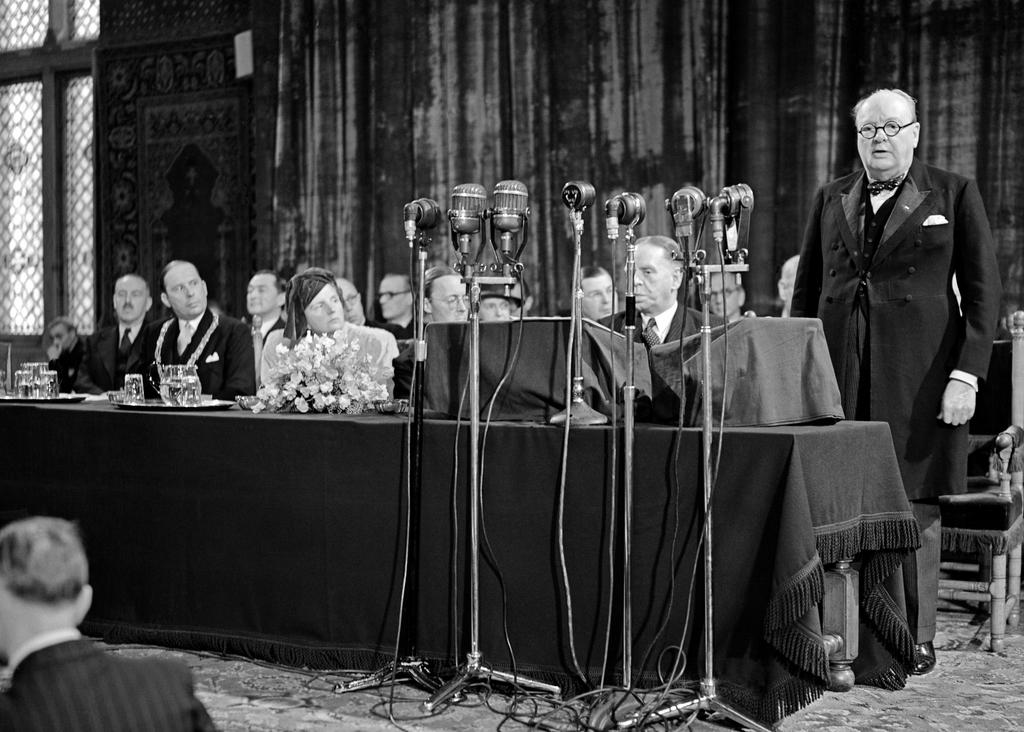
Churchill addresses Congress
Less than three weeks after the American entrance into World War II Winston Churchill becomes the first British prime minister to address Congress.Churchill a gifted orator urged Congress to back President Franklin D.Roosevelts proposal that America become the great arsenal of democracy and warned that the Axis powers would stop at nothing in pursuit of their war aims.Born at Blenheim Palace in 1874 Churchill joined the British Fourth Hussars upon his fathers death in 1895.
During the next five years he enjoyed an illustrious military career serving in India the Sudan and South Africa and distinguishing himself several times in battle.In 1899 he resigned his commission to concentrate on his literary and political career and in 1900 was elected to Parliament as a Conservative MP from Oldham.In 1904 he joined the Liberals serving a number of important posts before being appointed Britains First Lord of the Admiralty in 1911 where he worked to bring the British navy to a readiness for the war he foresaw.In 1915 in the second year of World War I Churchill was held responsible for the disastrous Dardanelles and Gallipoli campaigns and was thus excluded from the war coalition government.
However in 1917 he returned to politics as a cabinet member in the Liberal government of Lloyd George.From 1919 to 1921 he was secretary of state for war and in 1924 returned to the Conservative Party where two years later he played a leading role in the defeat of the General Strike of 1926.Out of office from 1929 to 1939 Churchill issued unheeded warnings of the threat of Nazi and Japanese aggression.After the outbreak of World War II in Europe Churchill returned to his post as First Lord of the Admiralty and eight months later replaced Neville Chamberlain as prime minister of a new coalition government.
In the first year of his administration Britain stood alone against Nazi Germany but Churchill promised his country and the world that Britain would never surrender.He rallied the British people to a resolute resistance and expertly orchestrated Franklin D.Roosevelt and Joseph Stalin into an alliance that eventually crushed the Axis.After a postwar Labor Party victory in 1945 he became leader of the opposition and in 1951 was again elected prime minister.
In 1953 he was knighted by Queen Elizabeth II and awarded the Nobel Prize in literature.After his retirement as prime minister he remained in Parliament until 1964 the year before his death.